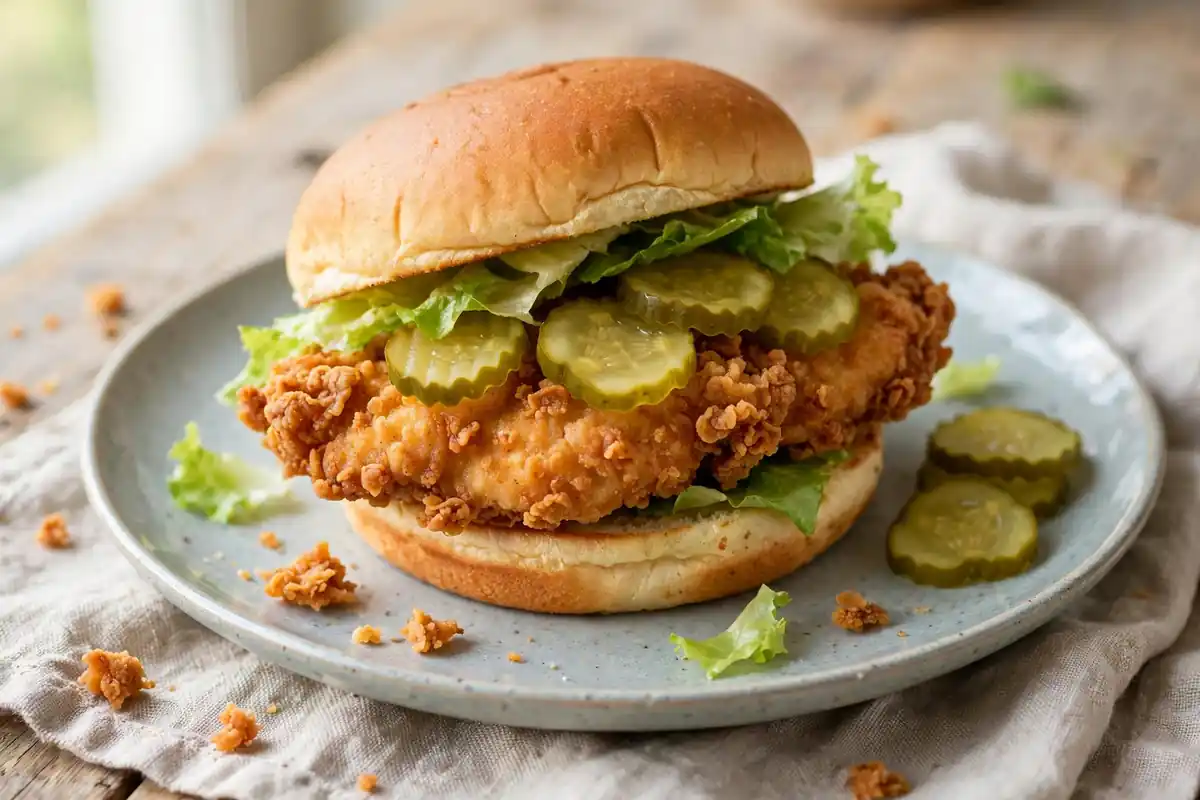
The buttermilk fried chicken sandwich is the comfort food that American diners and lunch counters have perfected over generations. It is simple on paper: a juicy fried chicken fillet, a soft bun, a few pickles, and a creamy sauce. But when each part is done well, the result is greater than the sum of its parts. The tang of the buttermilk, the crunch of the crust, and the cool bite of pickles make a sandwich that is hard to put down.
This version starts with a proper buttermilk brine. The chicken soaks for at least an hour, which seasons it from the inside and keeps it moist during frying. The coating is seasoned flour with a little cornstarch for crunch, and the sandwich is finished with a quick homemade ranch-style sauce and bread-and-butter pickles.
It is a perfect weekend lunch, and it scales up easily for a family dinner. Fry a batch of fillets, set out the buns and toppings, and let everyone build their own sandwich exactly the way they like it.
Why This Recipe Works
Buttermilk is the key to this sandwich. Its gentle acidity tenderizes the chicken without making it mushy, and its thickness helps the flour coating stick in a thick, even layer. The rest of the recipe is built around keeping that crust crisp: a hot pan, a wire rack, and a toasted bun.
- A buttermilk soak of at least one hour seasons and tenderizes the chicken all the way through.
- Cornstarch in the coating makes the crust lighter, crunchier, and slower to go soggy.
- A hot, steady frying temperature of 350 degrees Fahrenheit gives a golden crust without greasiness.
- Toasted brioche buns stay soft inside and firm enough to hold a juicy fillet.
- Pickles and a tangy sauce cut through the richness and keep the sandwich balanced.
Ingredients
For the Chicken
- 4 boneless, skinless chicken breasts (about 1 1/2 pounds), pounded to 3/4 inch thick
- 1 1/2 cups buttermilk
- 1 tablespoon pickle brine (from the pickle jar)
- 1 teaspoon salt
- 1/2 teaspoon black pepper
- 1/2 teaspoon garlic powder
For the Coating
- 1 1/2 cups all-purpose flour
- 1/2 cup cornstarch
- 1 tablespoon paprika
- 2 teaspoons garlic powder
- 1 teaspoon onion powder
- 1 teaspoon dried thyme
- 1 teaspoon salt
- 1/2 teaspoon black pepper
- 1/2 teaspoon cayenne pepper
For the Sauce
- 1/2 cup mayonnaise
- 2 tablespoons sour cream
- 1 tablespoon lemon juice
- 1 teaspoon Dijon mustard
- 1/2 teaspoon garlic powder
- 1/2 teaspoon dried dill
- Salt and black pepper, to taste
For Assembly
- 4 brioche burger buns
- 16 bread-and-butter pickle chips
- 4 lettuce leaves
- 1 tablespoon butter
- Vegetable oil, for frying
Instructions
- Brine the chicken. In a large bowl, whisk together the buttermilk, pickle brine, salt, black pepper, and garlic powder. Add the chicken breasts, turning to coat them fully. Cover and refrigerate for at least 1 hour, or up to 8 hours. The pickle brine adds a subtle tang that makes the chicken taste seasoned all the way through.
- Make the sauce. Stir together the mayonnaise, sour cream, lemon juice, Dijon mustard, garlic powder, and dill in a small bowl. Season with salt and pepper. Cover and refrigerate. The sauce can be made a day ahead, and it tastes even better the next day.
- Mix the coating. In a shallow dish, whisk the flour, cornstarch, paprika, garlic powder, onion powder, thyme, salt, black pepper, and cayenne pepper until well combined.
- Dredge the chicken. Remove one piece of chicken from the buttermilk, letting the excess drip back into the bowl. Press it into the seasoned flour, turning and pressing so the coating sticks on all sides. For a thicker crust, dip it in the buttermilk once more and coat it again. Place the coated fillets on a plate and rest them for 10 to 15 minutes.
- Heat the oil. Pour oil into a large, deep skillet to a depth of about 1 inch. Heat over medium-high heat until a thermometer reads 350 degrees Fahrenheit.
- Fry the fillets. Carefully place two fillets in the hot oil. Fry for 5 to 6 minutes per side, until the crust is golden brown and the internal temperature reaches 165 degrees Fahrenheit. Transfer to a wire rack to rest for 3 minutes. Repeat with the remaining fillets, letting the oil come back to temperature between batches.
- Toast the buns. Melt the butter in a clean skillet over medium heat. Place the buns cut side down and toast for 1 to 2 minutes until golden and lightly crisp.
- Assemble the sandwiches. Spread sauce on both halves of each bun. Place a lettuce leaf and four pickle chips on the bottom bun, add the hot chicken fillet, and close with the top bun. Serve immediately.
Tips for the Best Results
- Pound the chicken to an even 3/4 inch. Thick centers stay raw while thin edges dry out, so this step is worth the minute it takes.
- Do not skip the rest after dredging. The coating needs time to absorb moisture and bond to the chicken, or it will slide off in the oil.
- Keep the oil at 350 degrees Fahrenheit. A thermometer is the easiest way to be sure, and it removes all the guesswork.
- Use a wire rack for resting. Paper towels trap steam under the chicken and soften the crust you worked so hard to build.
- Sauce both buns. It adds flavor and creates a barrier that keeps the bun from soaking up juice from the chicken.
Variations to Try
- Nashville hot style: Brush the hot fried fillets with a paste of 2 tablespoons cayenne pepper, 1 tablespoon brown sugar, and 1/4 cup of the hot frying oil, and serve with pickles and white bread instead of a bun.
- Honey mustard: Swap the ranch-style sauce for a mix of 1/4 cup mayonnaise, 2 tablespoons honey, and 2 tablespoons Dijon mustard.
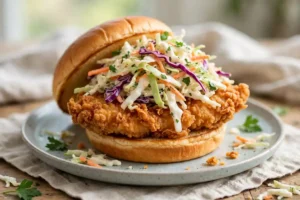
- Spicy slaw: Replace the lettuce with a crunchy slaw of shredded cabbage, carrots, and a little hot sauce.
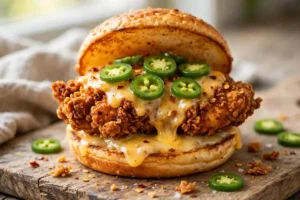
- Cheese: Add a slice of sharp cheddar or pepper jack to the fillet while it rests, so the heat melts it gently.
- Air fryer: Spray the coated fillets with cooking oil spray and air fry at 400 degrees Fahrenheit for 12 to 14 minutes, flipping once, until crisp and cooked through.
What to Serve With It
This sandwich is a full meal with a side of fries or potato wedges, but it also pairs beautifully with coleslaw, baked beans, or a simple cucumber salad. A cold glass of lemonade or sweet tea is the classic drink, and a handful of potato chips on the side never hurts. For a lighter meal, serve the fillet over a green salad with the sauce as a dressing.
Storage and Reheating
Store leftover fillets in an airtight container in the refrigerator for up to 3 days. Reheat on a wire rack in a 375 degree Fahrenheit oven for 8 to 10 minutes, until hot and crisp. The sauce keeps in a sealed container in the refrigerator for up to 5 days. Freeze cooked fillets for up to 2 months, wrapped tightly; thaw in the refrigerator overnight before reheating in the oven.
Frequently Asked Questions
Can I use chicken thighs instead of breasts?
Absolutely. Boneless, skinless thighs are juicier and harder to overcook, which makes them very forgiving. Pound them to an even thickness and fry for about 5 minutes per side, checking that the center reaches 165 degrees Fahrenheit.
Do I have to marinate the chicken for a full hour?
An hour is ideal, but even 30 minutes will help. If you are short on time, use a little more salt in the coating and do not skip the rest after dredging. For the best flavor, marinate overnight.
Why is my crust soggy?
Usually the oil was too cool, the pan was overcrowded, or the chicken rested on a flat plate instead of a wire rack. Fry at 350 degrees Fahrenheit, cook in batches, and rest the fillets on a rack so air can circulate underneath.
Can I make the coating ahead of time?
Yes. Mix the seasoned flour and store it in a sealed jar at room temperature for up to a month. It is handy to have ready for a quick weeknight sandwich.
What is the best bun for this sandwich?
Brioche buns are the favorite here because they are soft, slightly sweet, and sturdy. Potato buns are a great second choice. Whichever you pick, toast the cut sides so the bun holds up to the juicy chicken.
Can I bake the chicken instead of frying it?
You can. Spray the coated fillets with cooking oil spray, place them on a wire rack over a baking sheet, and bake at 425 degrees Fahrenheit for 20 to 25 minutes, flipping halfway through. The crust will be crisp, though a little less craggy than fried.