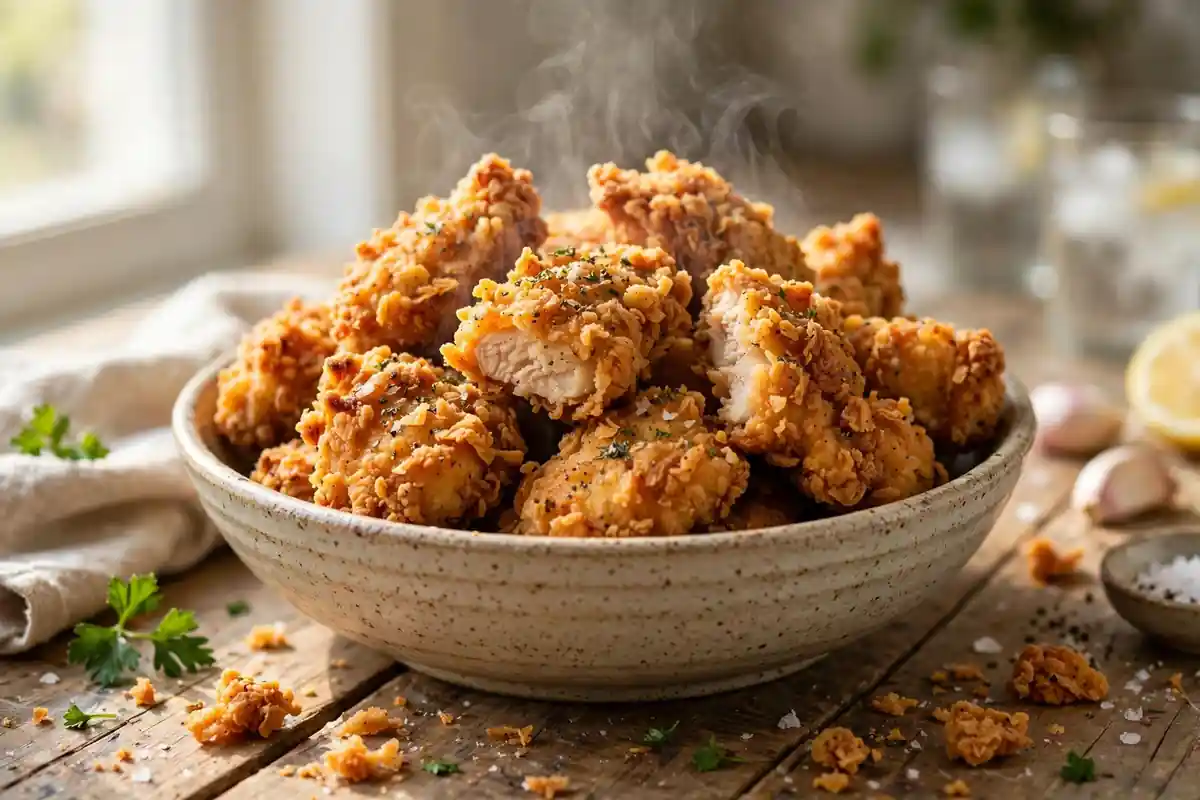
There is a reason crispy fried chicken shows up at nearly every American family gathering, picnic, and Sunday dinner. It is crunchy on the outside, juicy on the inside, and it tastes just as good cold the next day as it does hot from the pan. This homemade copycat-style version brings that same golden, crackly crust to your own kitchen, using simple ingredients you probably already have in your pantry.
This recipe is inspired by the famous fried chicken served at American fast-food restaurants, but it is made entirely at home, with your own hands and your own spice blend. You do not need a deep fryer, a secret recipe, or any special equipment. A heavy pot, a thermometer, and a little patience are enough to get chicken that shatters when you bite into it and stays moist all the way through.
What makes this recipe work is the combination of a buttermilk soak and a double dredge in seasoned flour. The buttermilk gently tenderizes the chicken and helps the coating stick, while the double dredge builds a thick, craggy crust that fries up golden and stays crisp. A rest before frying lets the coating set, so it does not fall off in the oil.
This recipe serves four people generously, with about eight pieces of chicken. It takes about 20 minutes of hands-on preparation, plus at least one hour of marinating, and about 25 minutes of frying. Plan ahead, and you will be rewarded with fried chicken that rivals anything from a restaurant.
Why This Recipe Works
Great fried chicken is not complicated, but it does depend on a few details. The buttermilk marinade does two jobs at once: the mild acid tenderizes the meat, and the thick liquid gives the flour something to cling to. The seasoned flour is built in layers, so the crust is thick enough to stay crunchy even after the chicken rests.
- The buttermilk soak keeps the chicken juicy and helps the coating stick.
- A double dredge creates a thick, craggy crust that fries up extra crispy.
- Resting the coated chicken for 15 minutes before frying sets the crust so it does not fall off.
- Frying at a steady 350 degrees Fahrenheit keeps the crust golden without burning.
- A wire rack, not paper towels, keeps the crust crisp while the chicken rests after frying.
Ingredients
For the Chicken and Marinade
- 3 pounds bone-in, skin-on chicken pieces (drumsticks, thighs, and wings work best)
- 2 cups buttermilk
- 1 tablespoon hot sauce, such as Frank’s RedHot
- 1 teaspoon salt
- 1/2 teaspoon black pepper
For the Seasoned Flour Coating
- 2 cups all-purpose flour
- 1/2 cup cornstarch
- 1 tablespoon paprika
- 2 teaspoons garlic powder
- 2 teaspoons onion powder
- 1 teaspoon dried oregano
- 1 teaspoon dried thyme
- 1 teaspoon salt
- 1 teaspoon black pepper
- 1/2 teaspoon cayenne pepper
- 1/2 teaspoon white pepper
For Frying
- Peanut oil or vegetable oil, for frying (about 4 to 6 cups, depending on your pot)
Instructions
- Marinate the chicken. In a large bowl, whisk together the buttermilk, hot sauce, salt, and black pepper. Add the chicken pieces and turn them so they are fully coated. Cover the bowl and refrigerate for at least 1 hour, or overnight for the best flavor and tenderness. Do not marinate for more than 24 hours, or the texture can turn soft.
- Mix the seasoned flour. In a large shallow dish or a paper bag, whisk together the flour, cornstarch, paprika, garlic powder, onion powder, oregano, thyme, salt, black pepper, cayenne pepper, and white pepper until evenly combined. The cornstarch is the quiet hero here: it makes the crust lighter and crunchier than flour alone.
- Set up your frying station. Line a baking sheet with a wire rack. Pour the oil into a large heavy pot or Dutch oven until it is about 2 inches deep. Clip a thermometer to the side of the pot and heat the oil over medium-high heat until it reaches 350 degrees Fahrenheit.
- Dredge the chicken the first time. Working with one piece at a time, lift a piece of chicken out of the buttermilk, letting the excess drip off for a few seconds. Press it into the seasoned flour, turning to coat all sides, and shake off the excess.
- Dredge the chicken a second time. Dip the floured piece back into the buttermilk briefly, then press it into the flour again. This second coat is what builds the thick, craggy crust. Place the coated chicken on the wire rack.
- Let the coating set. Once all the pieces are coated, let them rest on the rack for 15 minutes. The flour will look slightly damp as it absorbs moisture from the buttermilk, and that is exactly what you want. This rest is what keeps the crust attached during frying.
- Fry the chicken in batches. Carefully lower three or four pieces into the hot oil, skin side down. Do not crowd the pot, or the oil temperature will drop and the chicken will turn greasy. Fry for 12 to 15 minutes, turning once halfway through, until the crust is deep golden brown and the internal temperature reaches 165 degrees Fahrenheit for breasts and 175 degrees Fahrenheit for thighs and drumsticks.
- Rest and serve. Transfer the fried chicken to the clean wire rack and let it rest for 5 to 10 minutes before serving. The crust will stay crisp, and the juices will settle. Repeat with the remaining pieces, letting the oil return to 350 degrees Fahrenheit between batches.
Tips for the Best Results
- Use a thermometer. Oil temperature is the single biggest factor in good fried chicken. Too cool and the crust soaks up oil; too hot and the crust burns before the meat cooks through.
- Keep the chicken pieces similar in size so they finish cooking at the same time. If a drumstick is much larger than a wing, give it a few extra minutes.
- Do not skip the 15-minute rest after dredging. It is the difference between a crust that stays on and a crust that slides off in the oil.
- Season the chicken as soon as it comes out of the oil with a light pinch of salt while the crust is still hot and the salt will stick.
- Let the oil recover between batches. A minute or two at full heat brings it back to 350 degrees Fahrenheit.
- If the crust browns too fast but the meat is not done, move the chicken to a 325 degree Fahrenheit oven to finish cooking without burning the outside.
Variations to Try
- Extra spicy: Double the cayenne pepper and add 1 teaspoon of chili powder to the flour for a fiery kick.
- Herb and garlic: Add 1 tablespoon of finely chopped fresh rosemary and an extra teaspoon of garlic powder to the coating.
- Boneless tenders: Use boneless chicken tenders instead of bone-in pieces and fry for 6 to 8 minutes. They cook faster and are perfect for kids.
- Oven finish: Fry for 5 minutes to set the crust, then bake at 400 degrees Fahrenheit for 20 minutes to use less oil.
- Gluten-free: Swap the all-purpose flour for a 1-to-1 gluten-free flour blend and keep the cornstarch. The crust stays crisp.
What to Serve With It
Crispy fried chicken loves classic American sides. Serve it with creamy coleslaw, buttery mashed potatoes, or a pile of crispy french fries. Cornbread, biscuits, and pickles are all at home on the same plate, and a glass of sweet tea or lemonade rounds out the meal. For a lighter plate, add a simple green salad with ranch dressing.
Storage and Reheating
Let leftover fried chicken cool completely, then store it in an airtight container in the refrigerator for up to 4 days. To reheat and keep the crust crisp, place the pieces on a wire rack set over a baking sheet and warm them in a 375 degree Fahrenheit oven for 12 to 15 minutes. Avoid the microwave, which makes the crust soggy. Leftover chicken can also be frozen for up to 3 months; thaw it in the refrigerator overnight before reheating in the oven.
Frequently Asked Questions
Can I use boneless chicken for this recipe?
Yes. Boneless thighs or breasts work well, but they cook faster. Boneless thighs need about 8 to 10 minutes, and boneless breasts need about 6 to 8 minutes, depending on thickness. Use a thermometer to confirm the center reaches 165 degrees Fahrenheit.
Why did my coating fall off in the oil?
The most common causes are skipping the rest after dredging, oil that is too cool, or moving the chicken too much in the first minutes of frying. Let the coated chicken rest for 15 minutes, keep the oil at 350 degrees Fahrenheit, and do not turn the pieces until the crust has set, about 5 minutes in.
Can I make this fried chicken ahead of time?
Yes. You can marinate the chicken overnight and dredge it up to 2 hours before frying, keeping it covered in the refrigerator. Fried chicken also reheats well in the oven, so you can fry it a few hours ahead and reheat it at 375 degrees Fahrenheit for 10 minutes.
What oil is best for frying chicken?
Peanut oil is a favorite because it has a high smoke point and a neutral flavor, but vegetable oil or canola oil work just as well. Avoid olive oil, which has a lower smoke point and a stronger flavor that does not suit fried chicken.
How do I know the chicken is done without cutting into it?
Use an instant-read thermometer. Chicken is safe to eat when the thickest part reaches 165 degrees Fahrenheit, though dark meat tastes better at 175 degrees Fahrenheit. The crust should be deep golden brown and the juices should run clear.
Can I reuse the frying oil?
Yes, if it still smells clean and looks clear. Let it cool, strain it through a fine mesh strainer lined with cheesecloth, and store it in a sealed container. You can reuse it two or three times for frying chicken.